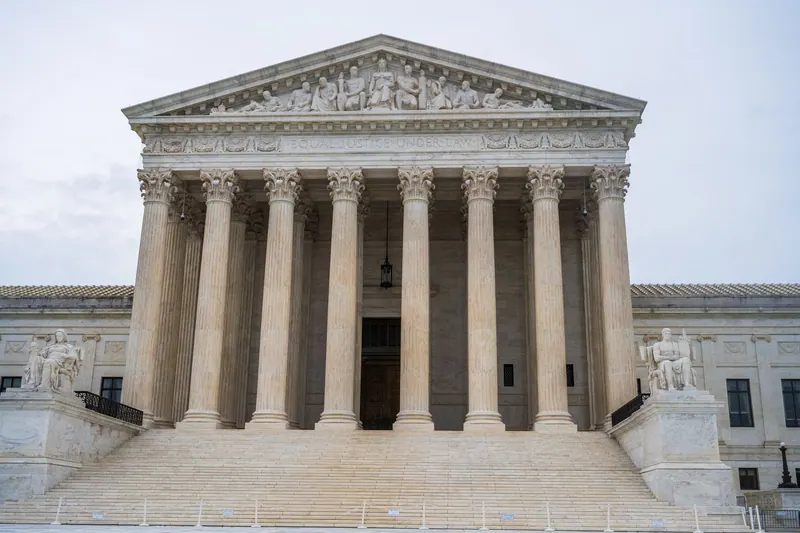
The regulators themselves just asked the highest court to settle it.
Two national regulator bodies tell the Supreme Court the prediction-market split is untenable
The short answer
The International Association of Gaming Regulators and the North American Gaming Regulators Association filed a joint Supreme Court amicus brief supporting New Jersey against Kalshi — arguing the three-way circuit split is disrupting licensing, enforcement and consumer protection nationwide.
In this article
The prediction-market fight picked up two new institutional voices Friday. The International Association of Gaming Regulators and the North American Gaming Regulators Association — the two bodies that represent the people who actually run state gambling enforcement — filed a joint amicus brief urging the Supreme Court to hear New Jersey's case against Kalshi.
Their argument is administrative, not ideological: the same product, offered by the same company under the same federal registration, now receives opposite treatment depending on which circuit it lands in. The Third Circuit found Kalshi's sports contracts likely swaps shielded from state law; the Ninth and Sixth found the opposite. For the officials who license operators, police unlicensed gambling and certify consumer protections, the brief says, that split is unworkable.
What the regulators told the court
- Licensing regimes depend on knowing which products need a license — a question the circuit split has made unanswerable at the state level.
- Enforcement consistency is breaking down: a platform can be ordered out of Ohio while running legally in New Jersey under identical federal registration.
- Consumer protections built into state gambling law — age checks, self-exclusion, integrity monitoring — fall away when a product slips into the federal derivatives bucket.
- The brief concedes all three appellate rulings came at the preliminary-injunction stage, weighing likelihood of success rather than final merits — but argues the split is real enough to warrant review.
The procedural posture is unusual
None of the circuit decisions is a final merits ruling — each decided whether a preliminary injunction should issue. Amicus filers are effectively telling the Court that waiting for final judgments means watching state regulatory frameworks fragment in the meantime. Whether the justices accept an interlocutory-posture case is an open question, but the regulators' entrance signals the dispute has outgrown industry-versus-state framing.
The brief amplifies New Jersey's cert petition and sharpens the stakes described in the Sixth Circuit ruling — while the CFTC's parallel rulemaking sits at OIRA review.