Explainer
Evolution One Stop Shop: Brands, Integration and Scope
The short answer
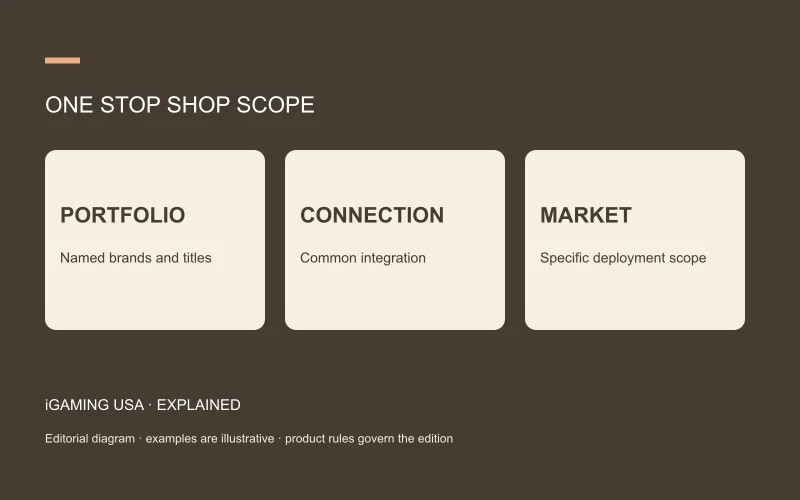
Evolution One Stop Shop, or OSS, is a supplier integration approach that brings portfolio content through a common connection. For an operator evaluating it, the useful benefit to examine is the shared integration scope: which brands, games, reports and tools the proposed connection includes in the intended market.
In this article
What Evolution One Stop Shop means
Evolution’s current solutions page describes OSS as a single integration for its portfolio. Its 2022 annual report gives a dated explanation listing Evolution, Ezugi, NetEnt, Red Tiger, Big Time Gaming and Nolimit City under the common approach.
The historical report explains the product’s development and terminology. A current commercial schedule should establish the actual brands and game editions included in a new deployment. Keeping those dates visible makes the comparison useful as portfolios evolve.
One connection, several responsibilities
Draw the integration as a hub with separate branches for content, accounts, reporting and support. Then label which party owns each branch. A common content connection can simplify a supplier relationship while the operator retains its own account and customer-service responsibilities.
An effective review asks for a sample journey rather than a slogan: launch a named title, identify its session and round, follow the wallet transaction and retrieve the associated report. Those are proposed acceptance steps. Their success would need to be documented in the relevant test environment.
| Scope item | What to specify |
|---|---|
| Content | Brand, title, edition and game identifier |
| Territory | Intended jurisdiction and approved configuration |
| Transactions | Session, round and wallet reference mapping |
| Reporting | Available fields, time zone and delivery schedule |
A catalog count needs a definition
A supplier portfolio can contain titles, versions, language options and configurations. For a meaningful count, decide which entity constitutes one catalog entry. Otherwise two proposals can report different totals while describing overlapping content.
Illustrative example: 100 titles with three listed language options can produce 300 title-language combinations. The catalog still contains 100 distinct titles under that counting rule. Neither number is inherently more informative; the label tells the reader what was counted.
How to compare a rollout announcement
Identify the supplier, operator, territory, product and stage. An announcement that an agreement has been signed describes a commercial milestone. Evidence that a named game is live in a specified operator catalog describes a later operational milestone.
For a small reading worksheet, use one row per territory and include announcement date, integration status and verified live date. Leave a field unfilled when the source does not establish it. That preserves the distinction between a global product capability and a specific delivered service.
Questions readers commonly ask
Does OSS mean every portfolio game is available in every US state? The current territory and product schedule establishes that scope. Is the 2022 brand list a current deployment inventory? It is a historical description used to explain how the approach was documented at that time.
For background, aggregator versus studio explains the surrounding roles, and gaming certification introduces version-specific product evidence.