Explainer
Greentube Mynt: The RGS, Game Tools and Integration Map
The short answer
Greentube Mynt is a supplier technology stack for delivering games and related engagement tools to operators. Its role becomes clearer when you separate the game-delivery layer from the operator’s accounts, payments and public website. For a B2B comparison, the useful question is which responsibilities Mynt takes on in the proposed integration.
In this article
What Greentube Mynt supplies
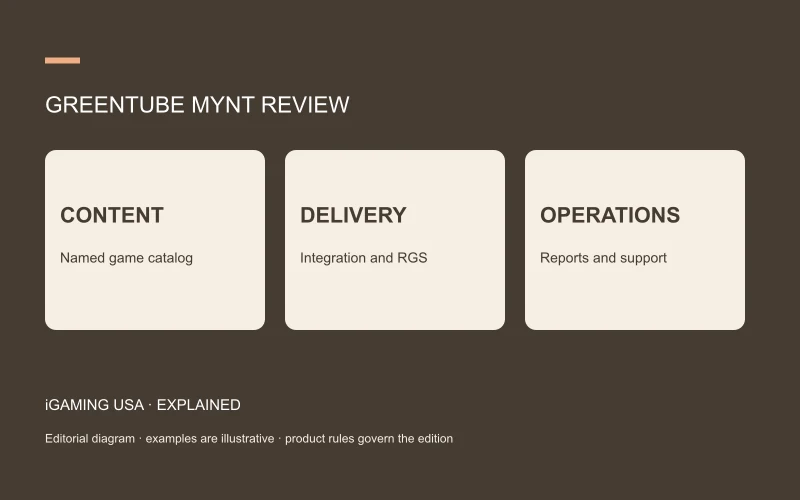
Greentube’s Mynt product page describes a microservices-based framework, access to games, integration support and engagement tools. Its wider product directory lists Mynt separately from other services, including Plurius and social-casino products.
That distinction matters when reading a presentation. A corporate portfolio can contain several products serving different purposes. The specific proposal should name the product, participating game catalog, interface and operating territory so that its scope can be evaluated consistently.
A practical map of the integration
Use four boxes: player interface, operator account system, supplier game delivery and supporting tools. Draw arrows for session launch, wager authorization, round result and reconciliation. This is an editorial planning model, not a claim that every Mynt customer uses identical architecture.
The map helps a reviewer ask concrete questions. Which system issues the session identifier? Which maintains the authoritative balance? Where does a completed round appear for customer support? Which team supplies a report matching game rounds to wallet entries? A clear answer assigns a responsible party to each operation.
| Responsibility | Evidence to request |
|---|---|
| Game delivery | Named catalog and integration specification |
| Account and balance | Defined wallet ownership and transaction flow |
| Reporting | Sample round and reconciliation reports |
| Release management | Version identifiers and supported change process |
What microservices tells a buyer
The term describes a software organization approach. For a buyer, the practical value comes from documented service behavior: monitoring, maintenance notices, recovery procedures and supported interfaces. A useful assessment therefore moves from the architecture label to the actual service commitments.
For example, a hypothetical acceptance checklist could cover a completed round, an interrupted session that resumes, and a report that reconciles the resulting transactions. Those are proposed review cases. Their results would need to come from an authorized test environment before anyone describes them as verified supplier performance.
Comparing proposals on the same basis
Ask each supplier to price the same catalog, territory and expected operating scope. Then identify implementation work, recurring charges, content charges and support responsibilities separately. This makes the commercial comparison meaningful even when two presentations use different platform terminology.
A simple worksheet can list each cost line with its unit: one-time project, monthly service or percentage of a defined revenue measure. The worksheet’s benefit is clarity; the supplier’s current contract establishes the actual prices and definitions.
Questions readers commonly ask
Is Mynt a consumer casino brand? The referenced page presents it as technology for operators. Does a global supplier page establish availability in every US state? Product documentation and state-specific deployment are separate evidence requirements.
For the wider supply chain, read iGaming platform, RGS and aggregator roles. The guide to revenue share versus flat fees provides a useful companion worksheet for comparing commercial units.